9 min read
Genie Started Making Its Own Product Launch Videos. Here's How.
Video was always the bottleneck in autonomous product launches. Then we found Remotion. Now video is just another task in the queue — scripted, rendered, and distributed by agents.
9 min read
Genie Started Making Its Own Product Launch Videos. Here's How.
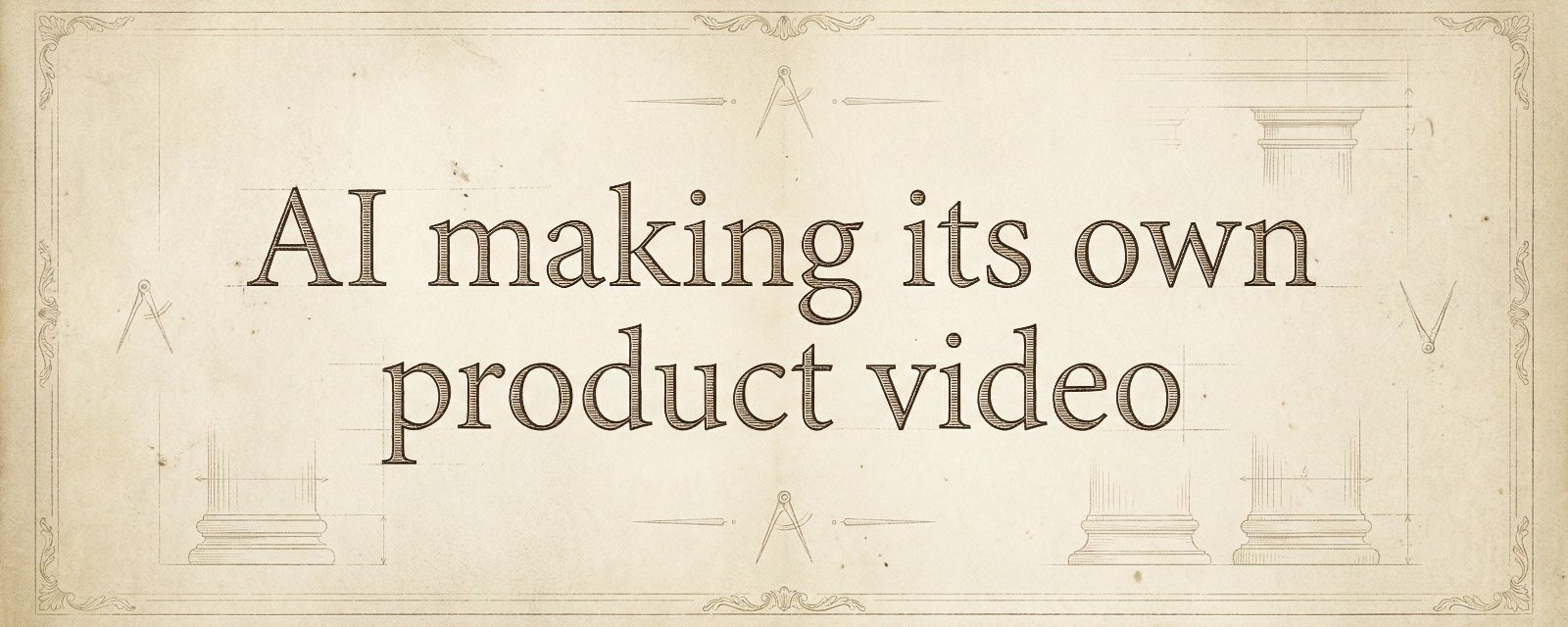
When video becomes just another output in the agent pipeline
Genie ships products.
We've written about that. The research, the building, the coordination, the deployment — all of it running while we're not watching.
But there was always one gap we didn't talk about.
Every product needs a video.
A demo. A launch clip. A promo that shows what the thing actually does. That's always been the human's job — brief a designer, hire an editor, spend three days going back and forth on revisions for a ninety-second clip.
Until we found Remotion.
Now video is just another task in the queue.
The Gap Nobody Thinks About
When you build an autonomous product pipeline, you think about the obvious outputs.
Code. Copy. Deployment. Distribution.
Video doesn't come up. Because video has always felt categorically different — creative, subjective, requiring tools that humans operate and taste that humans apply.
But step back and ask what a product demo video actually is.
A script. A sequence of scenes. Motion and timing. Text overlays. Data pulled from the product itself. Rendered to MP4.
That's not categorically different from what agents already do. It's just a different output format.
The gap wasn't capability. It was tooling.
What Remotion Actually Is
Most people hear "programmatic video" and think text-to-video AI tools.
Remotion is something more specific and more powerful than that.
It's a framework for creating videos programmatically using React — leveraging CSS, Canvas, SVG, WebGL, variables, functions, APIs, and algorithms to create effects and compositions. GitHub
Not a prompt-to-video generator. Not a template filler.
A codebase that renders real MP4s.
Each frame is a React component. Animations are interpolations. Sequences are compositions. The entire video is structured code — readable, editable, version-controlled, and parameterised.
Which means something specific for agent pipelines: if your agent can write React, it can produce video.
Remotion Skills is a toolset optimised for large language models — developers can command AI agents to directly write, modify, and generate professional video animations based on React, using simple natural language instructions. Users no longer need to type complex TypeScript code line by line — just tell the agent what to create, and the system automatically completes the code building and video rendering. Aibase
The creative barrier didn't disappear. It moved — from video editing software to natural language instructions to an agent that writes the code.
Why This Fits Into Genie's Pipeline Specifically

Genie's agents already write React.
They build dashboards, landing pages, UI components, form flows. They deploy to Vercel. They work with the same web technologies Remotion runs on.
There's no context switch. No new environment to learn. No separate tool to integrate manually.
Remotion supports seamless integration with the MCP Protocol, greatly simplifying the production process and development costs of programmatic videos. Aibase
The same agent that builds a product knows what that product does. It has the copy. The UI components. The feature list. The value proposition. It's been living inside that product's context for its entire task cycle.
Now it uses that same context to produce the launch video.
Script — written from the product spec. Scenes — structured around the core user flow. Motion — interpolated with Remotion's animation primitives. Text overlays — pulled from the landing page copy. Data visualisations — rendered from real product metrics.
Rendered to MP4. Ready for distribution.
No brief written by a human. No editor waiting on assets. No revision cycle.
What the Video Pipeline Actually Looks Like

Concretely — here's how the agent video production cycle runs inside Genie.
The product agent finishes building. It has a complete spec, a deployed URL, and a task log of everything it built.
A video agent picks up from that context. It scripts a demo sequence — opening hook, core feature walkthrough, value proposition close. Structured as scenes with defined timing.
It writes the Remotion composition. React components for each scene. Interpolated animations for transitions. Text overlays timed to the script. Motion graphics that match the product's visual language.
The Remotion CLI renders locally or server-side. Real MP4 output. Formatted for the target platform — wide for YouTube, square for Instagram, vertical for TikTok.
The distribution agent queues it alongside the landing page and the written content.
The entire launch stack — landing page, demo video, social clips, written posts — produced from a single product context, by agents, without a human creative brief.
That's what closing the loop looks like.
What This Actually Change
Before Remotion entered Genie's stack, the product launch sequence had a hard stop.
Agents could ship the product. They could write the copy. They could set up distribution.
But the video — the thing most likely to drive actual attention on X, LinkedIn, or a product hunt launch — sat waiting for a human to make it.
That asymmetry mattered. The autonomous pipeline was producing everything except the highest-leverage content format.
Now the pipeline is complete.
And something less obvious changes too.
When video production requires a human, it becomes a bottleneck — which means it becomes optional. Teams skip it, or do it late, or do it once and never update it. The demo video from launch day is still the demo video six months later even though the product has changed significantly.
When an agent can produce video from current product context on demand — that problem disappears. Every significant product update can have a fresh demo. Every new feature can have its own clip. The video stays current because producing it costs nothing beyond a task in the queue.
The Honest Caveats
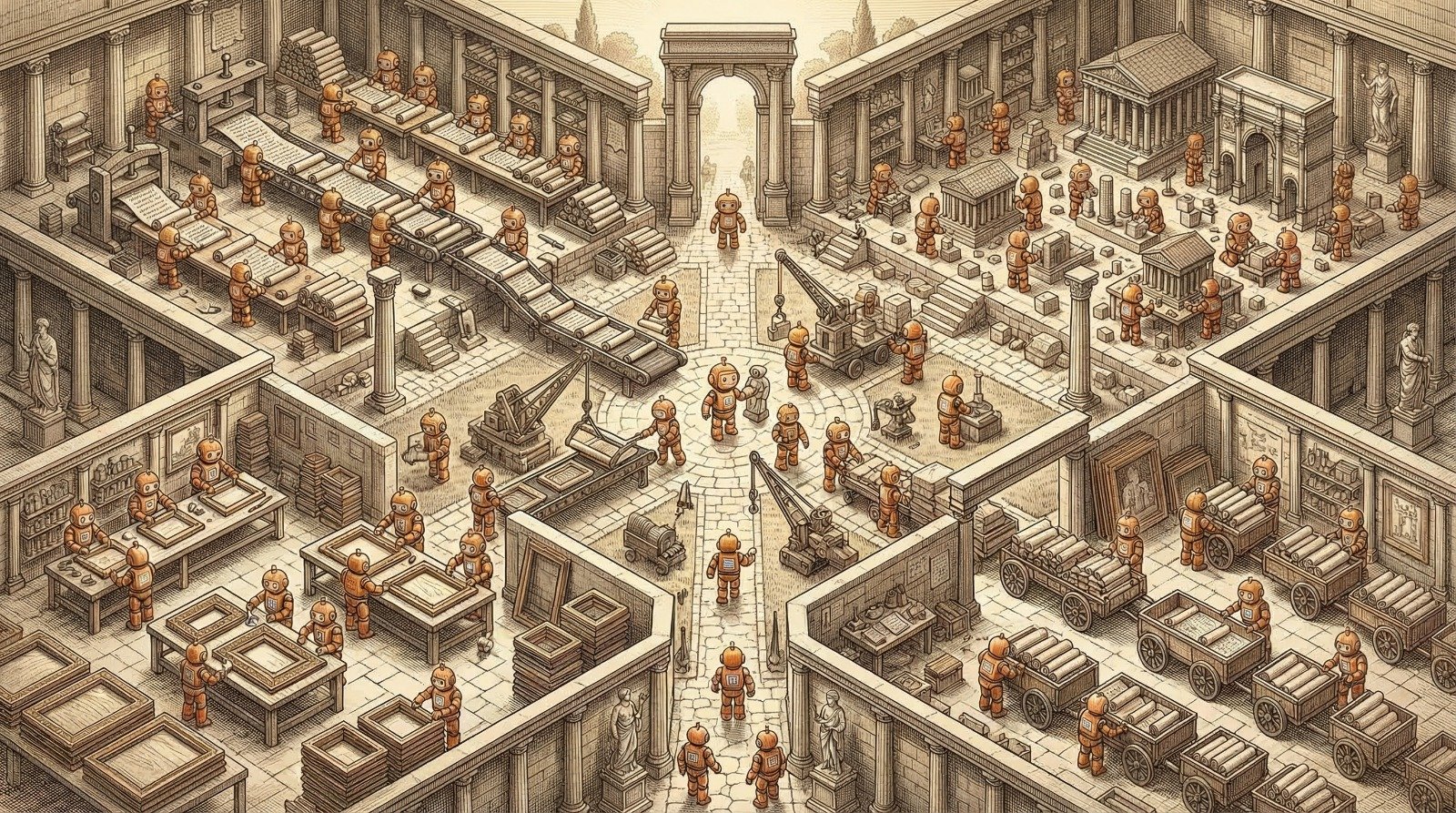
Remotion gives agents the capability to produce video. It doesn't guarantee the video is good.
Creative quality still depends on component design and scene structure. An agent working from a well-specified product context produces something coherent. An agent working from vague instructions produces something that technically renders but communicates nothing.
The prompt quality ceiling is real. Motion graphics that require genuine aesthetic judgment — pacing, visual hierarchy, emotional tone — still benefit from human review before they go out under a brand name.
Remotion maintains a list of agent skills that define best practices for working in Remotion projects — useful for AI agents like Claude Code, Codex, or Cursor. Remotion Those skills help agents avoid common structural mistakes. They don't replace creative direction entirely.
Licensing is also worth being clear on. Remotion is free for individuals and small teams of up to three people — beyond that, the company license starts at $100 per month. Dynamic Business For a production agent pipeline running commercial video output, that cost needs to be in the model.
And rendering is compute-intensive. At scale — multiple agents producing multiple videos concurrently — server-side rendering infrastructure becomes a real consideration, not an afterthought.
Where This Leaves the Stack
Genie's output list used to read: code, copy, deployment, distribution.
It now reads: code, copy, deployment, video, distribution.
The last creative gap in the autonomous product pipeline — the one that always required a human to sit down with editing software — is closing.
Video was the bottleneck not because agents couldn't understand what to produce. It was because there was no tool built for how agents actually work — code-native, parameterised, version-controlled, and composable with everything else in the stack.
Remotion is that tool.
For anyone building autonomous product pipelines, video is no longer a separate creative workstream.
It's just another task in the queue.
Share
Post on social or copy the link to share anywhere.